Most businesses focus on getting customers, but very few think about how much they’re losing without a website. Today, people don’t just walk into stores; they search, compare, and decide online before taking action.
That’s where having a website makes a real difference. It doesn’t just increase visibility, it directly impacts traffic, conversions, and overall revenue. In fact, studies show that businesses with a strong online presence can grow 15%–50% faster than those without one.
I’ve seen this play out consistently. A well-optimized website doesn’t just bring more visitors, it brings the right audience and turns that traffic into leads or customers.
In this article, I’ll break down how much having a website increases business, what actually drives that growth, and how to use your website as a revenue-generating asset.
How Much Can a Website Increase Sales?
A website can significantly increase website sales, depending on how well it’s built and optimized. I’ve seen businesses go from relying only on offline customers to generating a steady flow of online leads and revenue once they have a proper website in place.
Data backs this up. Small businesses can see 15%–50% revenue growth by using their website to engage with customers. On top of that, around 81% of consumers research online before making a purchase, which means a website directly influences buying decisions even if the final sale happens offline.
A website also increases sales by expanding reach beyond local customers. Instead of depending on walk-ins or referrals, I can attract users actively searching for products or services online.
Even small improvements can make a big difference. For example, better page speed, clearer CTAs, or improved user experience can increase conversion rates without needing more traffic.
In simple terms, a website doesn’t just bring more visitors; it increases the chances of turning those visitors into paying customers.
Why Having a Website Directly Increases Business Growth
Having a website directly increases business growth because it expands how customers find and interact with a business.
Increases visibility
I can reach users actively searching online instead of relying only on offline channels, bringing in more potential customers.
Brings high-intent traffic
A website attracts users who are already looking for a solution, which increases the chances of conversions.
Acts as a 24/7 sales channel
Even when the business is closed, the website continues to generate leads and guide users toward taking action.
Builds trust and credibility
Clear information, reviews, and content make the business look more reliable and influence buying decisions.
Improves conversion opportunities
A well-structured website helps turn visitors into leads or customers through better user experience and clear CTAs.
Supports scalable growth
t creates a system that continuously attracts and converts customers without relying on a single channel.
7 Ways a Website Helps Increase Sales
1. Expands Your Reach Beyond Local Customers
Expanding reach is one of the biggest ways a website increases sales. Instead of relying only on local customers, I can reach people who are actively searching online from different locations.
A website makes the business accessible beyond physical boundaries. Whether someone is nearby or in another city, they can discover the business through search, content, or ads.
This also brings in higher-intent traffic. People searching online are usually looking for a solution, which increases the chances of turning them into customers.
Over time, this shift from local reach to broader visibility creates a consistent flow of potential customers and directly contributes to business growth.
2. Builds Trust and Credibility
Building trust is one of the biggest factors in increasing sales, and a website plays a key role in that. Without a website, many customers won’t even consider a business, especially when they can’t find enough information online.
A well-designed website with clear details, reviews, and testimonials helps create a strong first impression. In fact, 75% of users judge a company’s credibility based on its website design.
It also allows me to showcase products, services, pricing, and past work in one place. This reduces uncertainty and helps customers feel more confident before making a decision.
Over time, this trust directly impacts conversions. When users feel confident and informed, they are far more likely to choose the business over competitors.
3. Drives Organic Traffic Through SEO
Driving organic traffic is one of the most effective ways a website increases sales. Without a website, I miss out on people who are actively searching for products or services online.
With a website, I can rank for relevant keywords and attract users who already have intent. These are not random visitors, they’re people looking for a solution, which significantly increases the chances of converting them into customers.
This also reduces dependency on paid ads. Instead of spending continuously to get traffic, I can generate consistent visitors through search.
Over time, this becomes a scalable and cost-effective growth channel that keeps bringing in high-intent traffic and potential customers.
4. Improves Conversion Opportunities
Improving conversions is where a website directly impacts revenue. It’s not just about getting visitors, it’s about guiding them to take action.
With a website, I can control how users move through the journey. From landing pages to CTAs, everything can be structured to lead users toward a specific goal, whether it’s a signup, inquiry, or purchase.
Most websites convert only around 2%–5% of visitors, which means even small improvements can significantly increase results.
I can also identify where users drop off and optimize those areas. Small changes like improving layout, simplifying forms, or refining messaging can have a direct impact on conversions.
Over time, this turns the website into a system that not only attracts traffic but consistently converts that traffic into leads and customers.
5. Creates a 24/7 Sales Channel
One of the biggest advantages of having a website is that it works all the time. Unlike a physical store or office, a website doesn’t close, it continues to attract visitors and generate leads 24/7.
Even when I’m not actively working, users can explore products or services, read information, and take action. This could be filling out a form, booking a service, or making a purchase.
It also speeds up decision-making. Customers can find answers instantly instead of waiting for business hours, which increases the chances of them moving forward.
Over time, this creates a consistent flow of opportunities. The website keeps working in the background, turning visitors into leads or customers without constant effort.
6. Reduces Customer Acquisition Costs
Reducing customer acquisition cost is one of the biggest long-term benefits of having a website. Instead of relying only on paid ads or outbound efforts, I can attract customers organically through search and content.
Once the website starts bringing in traffic, the cost per lead or customer drops significantly. I’m not paying for every click; I’m building a system that continues to generate traffic over time.
It also allows me to invest smarter. I can identify which channels bring the best results and focus only on what works, instead of spending blindly.
Over time, this makes customer acquisition more efficient and scalable. The same website can continue generating leads without increasing costs at the same rate.
7. Supports Scalable Business Growth
A website doesn’t just help in the short term; it supports long-term, scalable growth. Once it’s set up properly, it becomes a system that keeps attracting traffic, generating leads, and driving sales.
Unlike offline methods that require constant effort, a website can scale without increasing costs at the same rate. I can reach more people, handle more inquiries, and grow the business without needing proportional resources.
It also gives flexibility to expand. Whether it’s adding new services, targeting new keywords, or entering new markets, a website makes it easier to grow without starting from scratch.
Over time, this creates a compounding effect. Small improvements in traffic, conversions, and user experience add up, leading to consistent and sustainable business growth.
How a Website Impacts the Customer Journey
A website plays a key role at every stage of the customer journey, from discovery to final decision.
1. Awareness (Discovery stage)
I can attract users through search, ads, or content when they are first exploring solutions. This is where the website helps bring in people who may not know about the business yet.
2. Interest (Exploration stage)
Users visit the website to understand what the business offers and whether it fits their needs. Clear messaging and content help keep them engaged instead of leaving.
3. Consideration (Evaluation stage)
At this stage, users compare options by checking pricing, reviews, and details. A well-structured website makes it easier for them to evaluate and build confidence.
4. Decision (Conversion stage)
This is where users are ready to take action. Strong CTAs, simple navigation, and trust signals help push them toward signing up or making a purchase.
5. Purchase (Transaction stage)
A smooth checkout or inquiry process ensures users complete the action without friction. Any confusion or delay here can lead to drop-offs.
6. Post-Purchase (Retention stage)
After the purchase, the website continues to play a role through support, follow-ups, and helpful content. This helps build trust and increases repeat business.
Key Website Factors That Drive Sales
Not all websites generate sales. The difference usually comes down to a few key factors that directly impact how users interact and convert.
- Clear Value Proposition
I make sure users immediately understand what the business offers and why it matters. If this isn’t clear in the first few seconds, most visitors will leave. - Fast Loading Speed
A slow website can kill conversions. Faster pages keep users engaged and reduce drop-offs, especially on mobile. - Mobile-Friendly Design
Most users browse on their phones, so the website needs to be easy to navigate on smaller screens. A poor mobile experience directly affects conversions. - Strong Call-to-Actions (CTAs)
Every page should guide users toward a clear action. Well-placed and clear CTAs make it easier for users to take the next step. - Simple Navigation
Users should find what they’re looking for without confusion. A clean structure improves user experience and keeps visitors on the site longer. - Trust Signals (Reviews, Testimonials, Proof)
Showing reviews, case studies, or testimonials helps reduce doubt. This builds confidence and increases the likelihood of conversion. - High-Quality Content
Content should answer user questions and provide real value. The more helpful the content, the more likely users are to stay and convert. - Optimized Conversion Flow
From landing page to final action, the journey should feel smooth. Removing friction in forms, checkout, or navigation improves overall conversion rates.
Real Examples of How Websites Increase Revenue
Looking at real businesses makes it easier to understand how a website directly impacts growth and revenue.
1. Warby Parker (Blending Online Experience with Offline Sales)
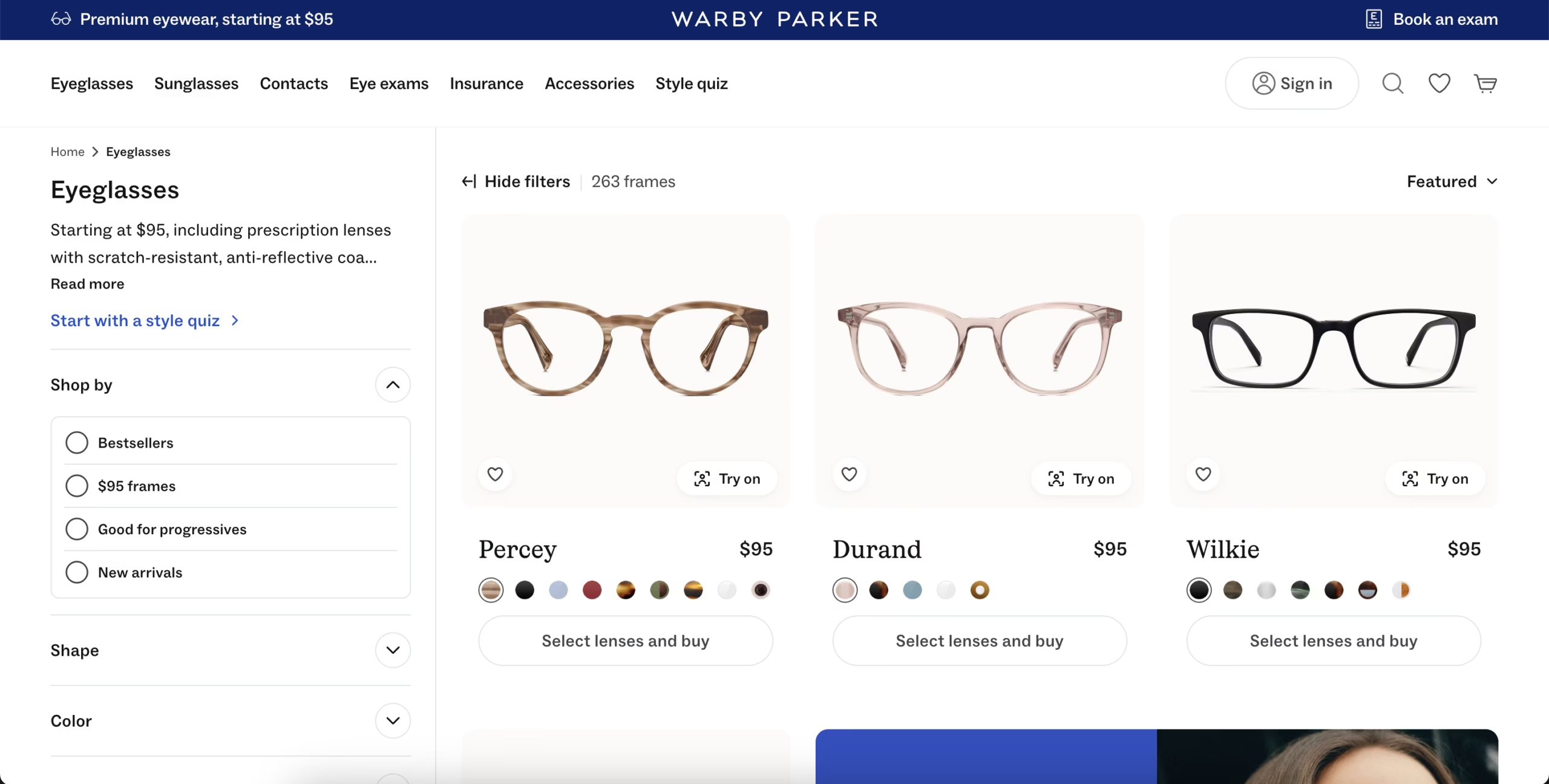
Warby Parker built its business by focusing heavily on its website experience. One of its key innovations was the “Home Try-On” feature, allowing users to order frames online and test them at home.
This removed a major barrier in online shopping, the inability to try products before buying. The website guided users through the process, making it simple and convenient.
By combining a strong online experience with a unique offering, Warby Parker increased conversions and built a scalable business model driven by its website.
2. Gymshark (Built a Billion-Dollar Brand Through Its Website)
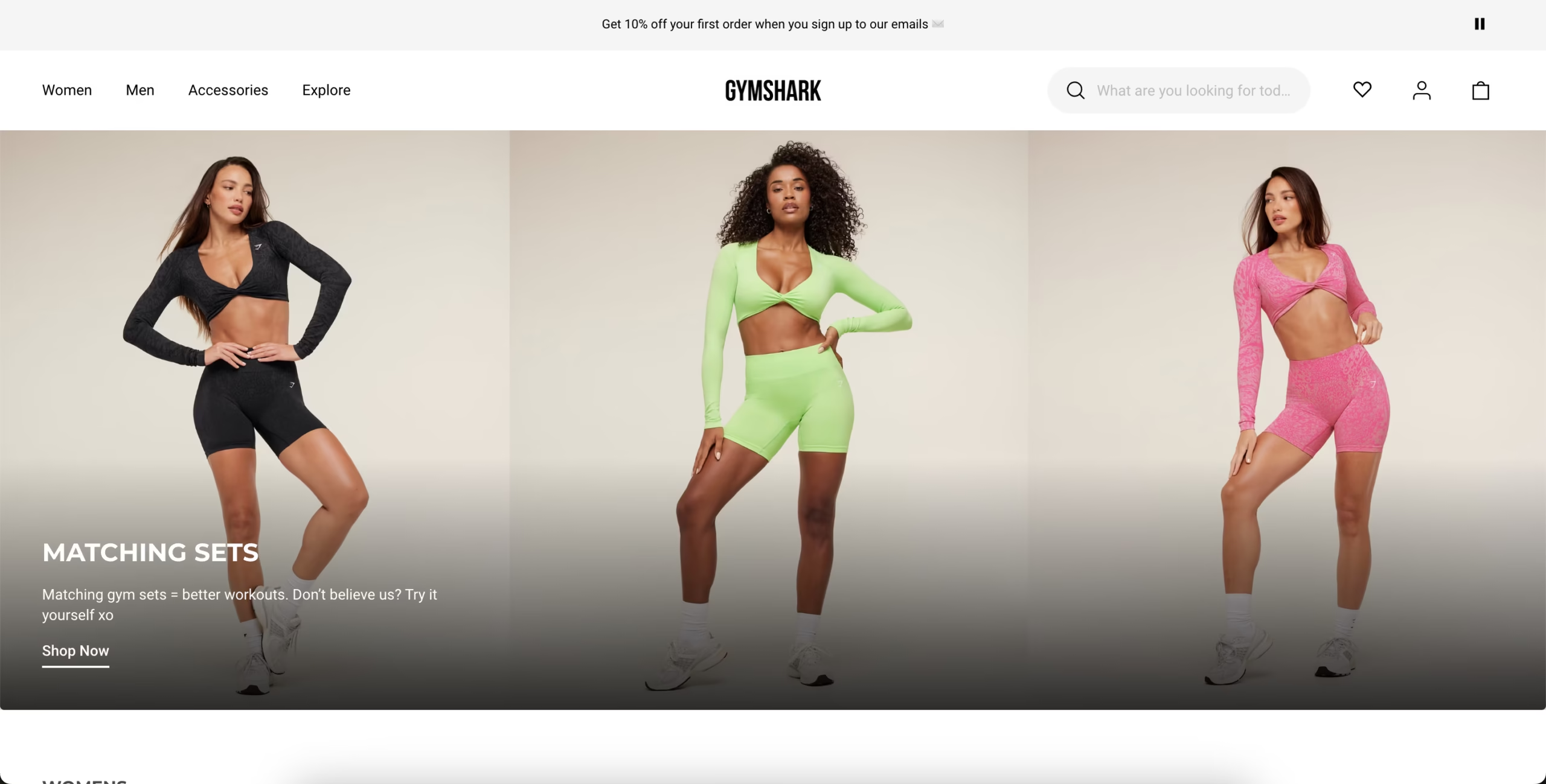
Gymshark didn’t rely on retail stores in its early stages; it built its growth almost entirely through its website. By combining influencer marketing with a high-converting e-commerce experience, it drove massive online traffic.
The website was optimized for product discovery, fast checkout, and mobile users. This made it easy for visitors to move from browsing to buying.
Over time, Gymshark scaled into a billion-dollar brand, showing how a well-optimized website can drive both traffic and revenue without traditional retail.
3. Glossier (Turning Community Into Conversions)

Glossier used its website to turn customer engagement into sales. Instead of just listing products, it focused on storytelling, user-generated content, and real customer reviews.
The website made users feel involved in the brand, which increased trust and encouraged purchases. Every product page acted as both content and a conversion funnel.
This approach helped Glossier grow rapidly by using its website as both a marketing and sales platform.
Website vs No Website: What Businesses Lose
The impact of having a website becomes clearer when I compare it with businesses that don’t have one. The difference isn’t small; it directly affects visibility, trust, and revenue.
| With a Website | Without a Website |
| I can reach customers actively searching online | I depend only on walk-ins, referrals, or offline marketing |
| The business is visible on Google and other channels | The business is invisible to online searches |
| I can generate leads and sales 24/7 | Sales only happen during working hours |
| Customers can explore services, pricing, and details anytime | Customers have limited information and may lose interest |
| Builds trust through content, reviews, and presence | Lack of online presence reduces credibility |
| I can track performance and optimize for better results | No clear data on what’s working or not |
| Scales easily across locations and audiences | Growth is limited to physical reach |
How to Maximize Sales From Your Website
Having a website is just the first step. To understand how to increase website sales, I need to optimize how users interact with it and guide them toward taking action.
- Focus on high-intent pages
I prioritize pages that directly impact revenue, like service pages, product pages, and landing pages, instead of spreading effort everywhere. - Make the value clear instantly
Users should understand what I offer and why it matters within a few seconds of landing on the page. - Optimize for conversions, not just traffic
It’s not about getting more visitors, it’s about turning existing traffic into leads or customers through better UX and messaging. - Use strong and clear CTAs
Every page should guide users toward a specific action, whether it’s contacting, signing up, or purchasing. - Improve page speed and mobile experience
A fast, mobile-friendly website keeps users engaged and reduces drop-offs, especially for first-time visitors. - Reduce friction in the user journey
Simplifying forms, navigation, and checkout processes makes it easier for users to complete actions. - Test and improve continuously
I regularly analyze behavior, test changes, and optimize based on what actually improves conversions.
Key Metrics to Measure Website Impact on Sales
To understand how much a website actually contributes to business growth, I focus on a few key metrics that directly connect traffic to revenue.
| Metric | What It Shows |
| Conversion Rate | Percentage of visitors who take action (signup, inquiry, purchase), directly tied to sales performance |
| Leads / Sales Generated | Total number of inquiries, sign-ups, or purchases coming from the website |
| Traffic Sources | Where visitors come from (SEO, ads, social) and which channels drive actual conversions |
| Customer Acquisition Cost (CAC) | How much does it cost to acquire a customer through the website |
| Revenue per Visitor | Average revenue generated per website visitor |
| Bounce Rate | The percentage of users who leave without interacting helps identify weak pages |
| Average Time on Page | Indicates how engaged users are with your content |
| Funnel Drop-Off Rate | Shows where users leave before converting (critical for optimization) |
| Click-Through Rate (CTR) | Measures how often users click on CTAs or key links |
| Return on Investment (ROI) | Compares revenue generated from the website against total spend |
Conclusion
A website is no longer just an online presence; it directly impacts how a business grows, attracts customers, and generates revenue. From increasing visibility to improving conversions, it plays a role at every stage of the customer journey.
I use a website not just to bring traffic, but to understand user behavior, optimize performance, and turn that traffic into actual results. When done right, it becomes a system that consistently generates leads and supports long-term growth.
In the end, businesses that treat their website as a growth asset, not just a digital placeholder, are the ones that scale faster and make better, data-driven decisions.
Frequently Asked Questions
What is the impact of having a website on a business?
A website increases visibility, builds trust, and helps attract customers online. It also allows me to generate leads, track performance, and improve conversions over time.
How much can a website increase sales?
A website can significantly increase sales by bringing in high-intent traffic and improving conversion rates. The actual impact depends on how well it is optimized.
Can small businesses benefit from having a website?
Yes, even small businesses benefit from having a website. It helps reach more customers, compete with larger brands, and generate consistent leads.
Does a website help in getting more customers?
Yes, a website helps attract customers through search engines, ads, and content. It makes the business discoverable to people actively looking for solutions.
What features should a website have to increase sales?
A website should have clear messaging, fast loading speed, mobile-friendly design, strong CTAs, and easy navigation to improve conversions.
How does a website reduce marketing costs?
A website can generate organic traffic through SEO, reducing dependency on paid ads. Over time, this lowers the cost of acquiring customers.
Is SEO necessary for a website to increase sales?
Yes, SEO helps bring in high-intent traffic from search engines. Without it, a website may not reach the right audience.
How much website traffic do you need to make money?
There’s no fixed number, but even a small amount of high-intent traffic can generate revenue. It depends more on conversion rate than just traffic volume.