You have about 8 seconds to convince a visitor to stay on your landing page. According to Nielsen Norman Group, that’s roughly how long it takes someone to decide whether your page is worth their time, and your value proposition is what does the convincing.
Most landing pages fail not because of weak design or poor traffic, but because the value proposition is vague, generic, or buried. Visitors land on the page, can’t immediately tell what’s in it for them, and leave.
A strong value proposition for your landing page cuts through that noise. It tells your visitor exactly what you offer, who it’s for, and why it beats the alternative, in one clear, compelling statement.
In this guide, you’ll learn how to write a value proposition that actually converts, where to place it on your landing page, and what good looks like with 8 real-world examples you can model.
What Is a Value Proposition? (And What It’s Not)
A value proposition is a one-to-two sentence statement that tells your landing page visitor what you offer, who it’s for, and why it’s better than the alternative, in plain language, instantly.
It lives at the top of your landing page and does the heaviest lifting of any copy on your site. Before a visitor reads your features, watches your demo, or checks your pricing, they read your value proposition. If it doesn’t land in the first few seconds, nothing else gets a chance.
The simplest test: show your value proposition to someone unfamiliar with your brand for five seconds, then take it away. If they can’t tell you what you do, who it’s for, and why it matters, rewrite it.
Why Your Landing Page Value Proposition Determines Conversions
Most landing pages don’t have a traffic problem. They have a clarity problem.
Visitors arrive with a question, “Is this for me?”, and your value proposition has roughly 8 seconds to answer it. Miss that window, and they’re gone, regardless of how good your product actually is.
The value proposition is the first thing a visitor reads and the last thing most businesses get right. It sets the entire frame for how someone experiences the rest of your page. A strong one makes your CTA feel obvious. A weak one makes even a great offer feel unconvincing.
Research by Invesp found that refining a value proposition can increase conversions by up to 90%, more than any other single change on a landing page, including design, button color, or copy length.
That’s because it doesn’t just inform, it filters. A sharp value proposition attracts the right visitors and pre-qualifies them before they even scroll. By the time they hit your CTA, the decision is already half-made.
Top 3 Elements Every Strong Value Proposition Needs
A value proposition for your landing page isn’t just a sentence you slap on a hero section. It’s a system, and every high-converting one is built from the same three parts.
1. A Headline That States the Core Promise
This is the one line a visitor reads before anything else. It should communicate the single biggest benefit you deliver, not what your product is, but what it does for the person reading it.
Weak: “AI-Powered Project Management Software” Strong: “Finish Projects On Time Without the Back-and-Forth”
One describes the tool. The other sells the outcome.
2. A Subheadline That Adds Clarity
Your headline hooks them, your subheadline closes the loop. This is where you answer “for who?” and “how?” in one or two sentences. It supports the promise without repeating it.
Think of it as the layer that turns interest into understanding.
3. A Visual That Reinforces the Message
Words tell, visuals prove. A screenshot, product image, or short demo video placed next to your value proposition makes the benefit tangible. Visitors process images 60,000x faster than text, so what they see the moment they land either confirms your headline or contradicts it.
All three work together. A strong headline with a weak visual creates doubt. A great visual with a vague headline creates confusion. When they align, conversions follow.
How to Write a Value Proposition for Your Landing Page
Step 0: Know Exactly Who You’re Writing For
Most bad value propositions aren’t bad because of poor writing; they’re bad because the writer was thinking about their product instead of a specific person. Before you write a single word, get clear on who your visitor is, what they do, and what keeps them up at night. The more specific your mental picture of that person, the sharper your value proposition will be.
Step 1: Identify Your Visitor’s Biggest Pain Point
Start with your customer, not your product. What’s the one problem that brings them to your landing page in the first place?
A project management tool targeting overwhelmed team leads shouldn’t open with “powerful task management.” It should open with the feeling of missing deadlines, dropped handoffs, and endless status meetings. That’s the pain. Lead with it.
Before: “Advanced project management for modern teams.”
After: “Stop chasing updates. Start finishing projects.”
Step 2: Define the Specific Outcome You Deliver
Don’t describe your product, describe the life after your product. What does the customer gain, save, or avoid by using what you offer? Outcomes convert. Features don’t.
Before: “Real-time collaboration and file sharing tools.”
After: “Your whole team, always on the same page, without the back-and-forth.”
The product is the same. The second version sells what the customer actually wants.
Step 3: Find Your Differentiator
Why should someone choose you over the three other tabs they have open? Your differentiator doesn’t have to be radical; it just has to be real and specific. Speed, simplicity, price, support, pick the one that matters most to your audience and own it. Trying to claim all of them means owning none of them.
Before: “The best tool for growing businesses.”
After: “The only project tool built for agencies juggling 10+ clients.”
Specific always beats superlative.
Step 4: Write, Then Cut
Take everything from the three steps above and write a rough sentence. Don’t edit yet; just get it out. Then start cutting. Remove every word that doesn’t change the meaning if you take it out. Then cut again.
First draft: “We help busy marketing teams stop wasting time on status updates and focus on work that actually moves the needle, faster than any other tool out there.”
After one round of cuts: “For marketing teams who hate status meetings, everything in one place, moving fast.”
Final: “Less meetings. More marketing.”
The best value propositions feel effortless to read. That’s not an accident, it’s editing.
8 Landing Page Value Proposition Examples (And Why They Work)
The best way to learn how to write a value proposition for a landing page is to study ones that already work. Here are 8 examples worth modeling, and the specific reason each one converts.
1. Stripe
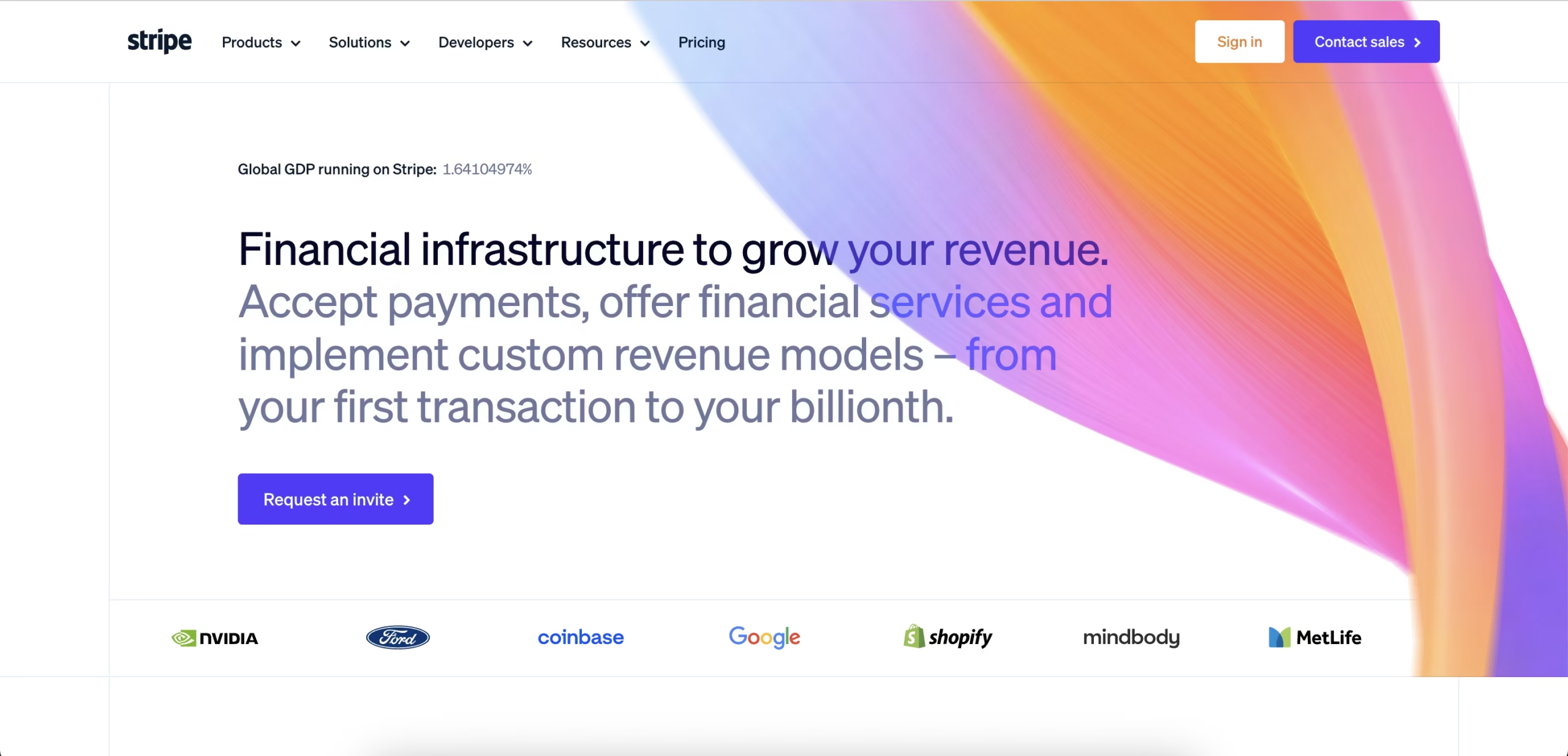
Stripe’s value proposition, “Financial infrastructure to grow your revenue”, doesn’t try to be interesting. It tries to be understood. In a space full of buzzwords, Stripe leads with exactly what they do and why it matters to the business owner reading it. No metaphors. No personality overload. Just a clean, confident statement that earns trust immediately.
2. Slack
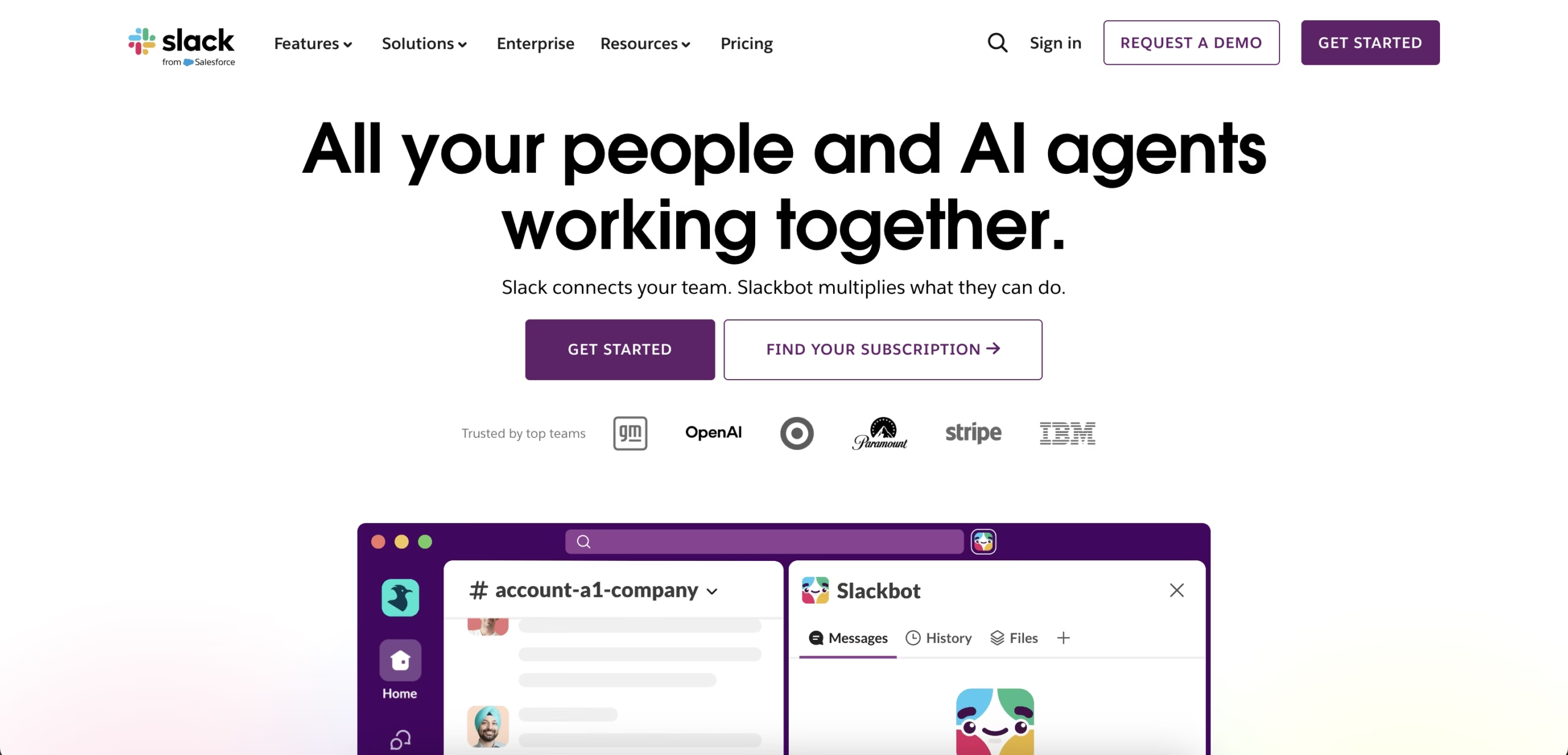
“Made for people. Built for productivity.” Slack doesn’t sell you a messaging tool, it sells you a better workday. The two-part structure is deliberate: it acknowledges the human side first, then ties it to the business outcome. Lead with empathy, close with value.
3. Notion
“One workspace. Every team.” Four words. Notion’s value proposition works because it collapses a complex product into a single, aspirational idea. It doesn’t explain features; it sells the dream of having everything in one place. The simpler the promise, the more ambitious it feels.
4. Canva
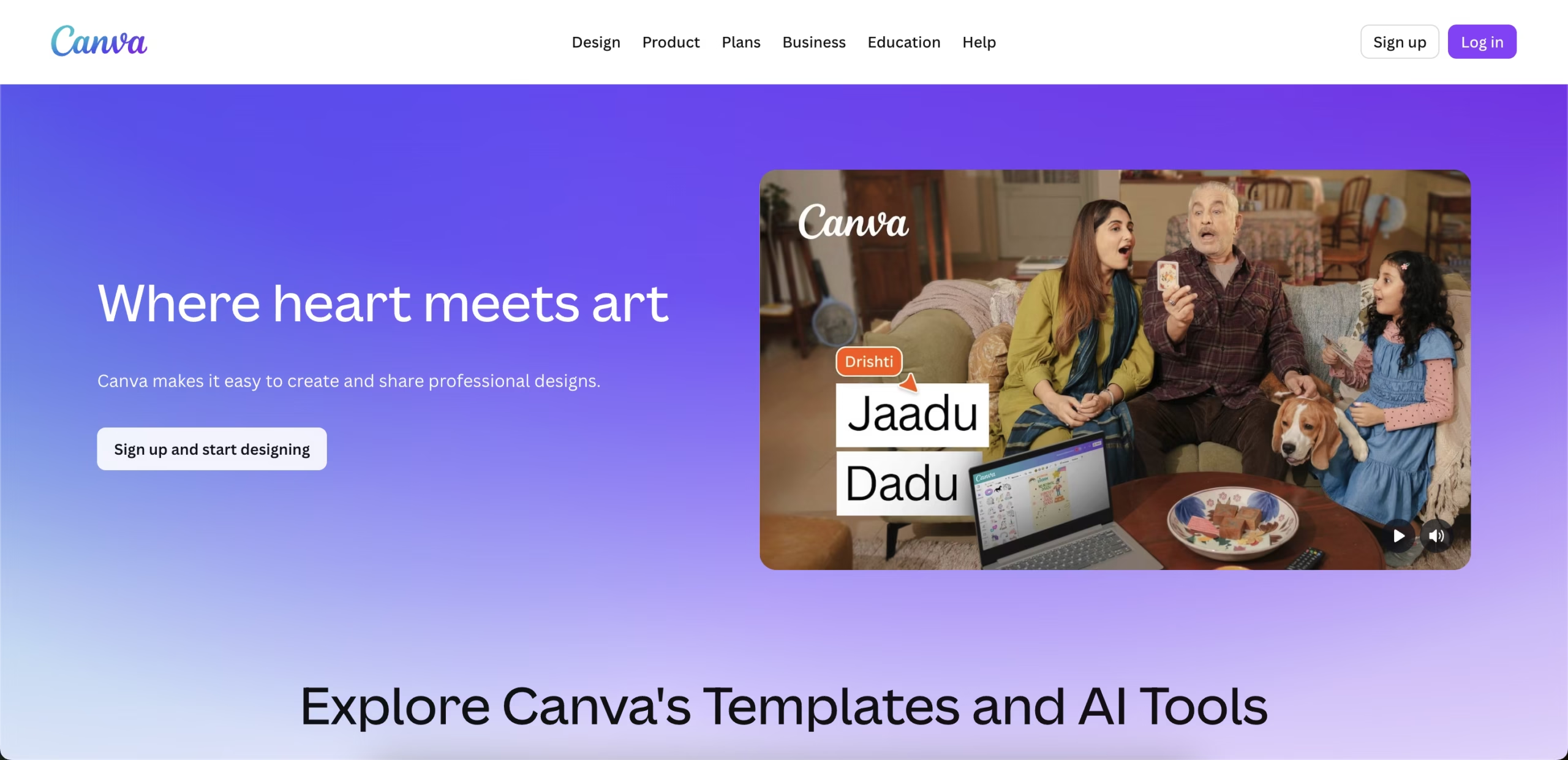
“Design anything. Publish anywhere.” Canva’s genius is in who they’re talking to, people who don’t think of themselves as designers. The value proposition removes the barrier before the visitor even feels it. No expertise required. No learning curve implied. Just a possibility.
5. Shopify
“Start your business. Build your brand. Own your future.” Three statements that escalate in scale. Shopify doesn’t sell an e-commerce platform; it sells entrepreneurial identity. It meets the visitor at their dream, not at the product feature. That emotional anchor is what makes it stick.
6. Zoom
“One platform to connect.” Short enough to be a tagline, specific enough to be a value proposition. In a world where everyone already knows what Zoom does, they don’t need to explain; they need to reassure. One platform. That’s the promise. No oversell needed.
7. Dropbox
“Keep life organized and work moving, all in one place.” Dropbox opens with the pain before offering the solution. Problem-first framing works because it mirrors how the visitor is already thinking. When someone reads it and thinks, “yes, that’s exactly my problem”, you’ve already won half the battle.
8. Basecamp
Basecamp uses its value proposition to push back on the market. Their messaging openly criticizes bloated project management tools and positions Basecamp as the calm, sane alternative. It’s polarizing by design, and that’s the point. A value proposition brave enough to repel the wrong customer will always convert the right one better.
Value Proposition Mistakes That Kill Conversions
Writing for Your Boss, Not Your Customer
The most common mistake. When a value proposition sounds like it was written to impress a boardroom, polished, corporate, full of industry terms, it stops connecting with the actual person reading it. Your visitor doesn’t care how your company describes itself internally. They care about what’s in it for them.
Being Clever Instead of Clear
Wordplay and wit have a place in marketing. Your value proposition isn’t that place. If a visitor has to pause for even a second to decode what you mean, you’ve already lost them. Clarity always wins over cleverness.
Sounding Like Everyone Else
“The fastest, easiest, most powerful solution for your business.” If your value proposition for your landing page could appear on a competitor’s website without anyone noticing, it isn’t a value proposition; it’s a placeholder. Generic claims don’t differentiate; they disappear.
Leading With Features Instead of Outcomes
Nobody buys a feature. They buy what the feature does for their life. “Automated reporting” is a feature. “Know exactly how your business is performing, without touching a spreadsheet” is an outcome. One is forgettable. The other converts.
Trying to Say Everything at Once
A value proposition that tries to speak to everyone ends up resonating with no one. The more you try to pack in, multiple audiences, multiple benefits, multiple use cases, the weaker it gets. One visitor. One promise. One reason to stay.
How to Test Whether Your Value Proposition Is Working
Writing a strong value proposition is step one. Knowing whether it actually works is step two, and most businesses skip it entirely.
1. The 5-Second Test
Show your landing page to someone unfamiliar with your brand for exactly five seconds, then take it away. Ask them what the company does, who it’s for, and why they should care. If they can’t answer all three, your value proposition isn’t doing its job. This test costs nothing and exposes clarity problems faster than any analytics tool.
2. A/B Testing
Run two versions of your landing page with different value propositions and split your traffic between them. Keep everything else identical, layout, CTA, imagery, so the only variable is the message. Give it enough traffic to reach statistical significance, then let the data decide. Gut feel got you to version one. Data gets you to version two.
3. Scroll and Heatmap Tracking
Tools like Hotjar or Microsoft Clarity show you exactly where visitors drop off. If people aren’t scrolling past your hero section, your value proposition isn’t giving them a reason to. A high exit rate at the top of the page is almost always a messaging problem, not a design one.
4. Watch Your Bounce Rate
A sharp drop in bounce rate after changing your value proposition is one of the clearest signals that you’ve improved it. Pair that with time-on-page data, if visitors are staying longer and converting more, the message is landing.
Conclusion
Your landing page can have the best design, the fastest load time, and a flawless funnel, and still fail if your value proposition doesn’t land in the first few seconds.
It doesn’t need to be clever. It doesn’t need to be long. It just needs to answer one question clearly: “Why should I choose you?”
Start with your customer’s pain, define the outcome you deliver, find the one thing that sets you apart, and cut everything else. Then test it, refine it, and test it again.
The brands that convert consistently aren’t the ones with the biggest budgets; they’re the ones with the clearest message. Now you have the framework to build one.
Frequently Asked Questions
What is a value proposition on a landing page?
A value proposition is a clear, concise statement at the top of your landing page that tells visitors what you offer, who it’s for, and why it’s better than the alternative. It’s the first thing people read and the biggest factor in whether they stay or leave.
How long should a value proposition be?
One to two sentences, sometimes less. If you need three or more sentences to explain your value, the proposition isn’t clear enough yet. Keep editing until it’s impossible to cut further without losing meaning.
What’s the difference between a value proposition and a tagline?
A tagline is built for memorability. A value proposition is built for clarity. Nike’s “Just Do It” is a great tagline but tells you nothing about what they sell. A value proposition always answers what, who, and why.
Where should the value proposition appear on a landing page?
Your value proposition for a landing page should always sit above the fold, the section visible before a visitor scrolls. It should be the first thing eyes land on, typically paired with a supporting subheadline and a visual that reinforces the message.
How do I know if my value proposition is working?
Run a 5-second test with someone unfamiliar with your brand. If they can’t tell you what you do and why it matters after five seconds, rewrite it. For data-backed validation, use A/B testing and monitor bounce rate changes.
Can I have different value propositions for different audiences?
Yes, and you should if your audiences have different pain points. Create separate landing pages with tailored value propositions for each segment rather than trying to speak to everyone on one page.