Ranking a landing page today isn’t the hard part; getting it to convert consistently is.
I’ve worked on pages that pulled in steady organic traffic but barely generated leads. The issue usually comes down to intent mismatch, weak structure, or no clear path to action. SEO for landing pages isn’t just about visibility anymore; I have to make sure the traffic actually turns into results.
It matters more than ever now. Organic search drives around 53% of all website traffic, but most landing pages still struggle to convert because they aren’t built with intent and conversion in mind.
In this guide, I’ll walk through how I approach SEO for landing pages in 2026, focusing on what actually helps pages rank, attract the right users, and convert without relying on ads.
What Is SEO for Landing Pages?
SEO for landing pages is the process of optimizing a page so it can rank in search results and bring in high-intent traffic that’s more likely to convert.
I don’t just treat a landing page as a place to collect leads. I treat it as an entry point from search. That means the page has to match what users are searching for, answer their intent clearly, and guide them toward a specific action.
Unlike blog posts, landing pages are usually focused on one goal, whether it’s generating leads, selling a product, or getting sign-ups. So the SEO approach here is slightly different. It’s not just about ranking for keywords, but making sure the page aligns with intent, builds trust, and converts that traffic.
In simple terms, a well-optimized SEO landing page does three things:
- Ranks for the right keywords
- Matches search intent
- Converts visitors into leads or customers
Why SEO for Landing Pages Matters More in 2026
- Paid ads are getting expensive, and the moment I stop spending, the traffic stops. SEO helps me build a consistent, long-term traffic source without relying on ads.
- Users don’t browse anymore. They search with clear intent, land on a page, and decide quickly whether to stay or leave.
- Search results are more competitive than ever, with ads, featured snippets, and AI-generated answers taking up space. Just ranking isn’t enough anymore.
- If my landing page doesn’t match what the user is looking for within seconds, they leave. There’s very little room for confusion now.
- Most landing pages still don’t convert. The problem usually isn’t traffic — it’s poor structure, weak messaging, or no clear path to action.
- SEO helps me attract users who are already searching for what I offer, which makes them far more likely to convert.
- A well-optimized landing page doesn’t just bring traffic, it consistently turns that traffic into leads and revenue.
How SEO Landing Pages Actually Work (Simple Framework)
- Step 1: Bring the right traffic (not just more traffic)
I focus on high-intent, long-tail keywords instead of broad terms.
For example, instead of targeting “SEO services,” I would target something like “SEO services for SaaS startups” because the intent is much clearer.
- Step 2: Match search intent instantly
The moment someone lands, the page should reflect exactly what they searched for.
For example, if someone searches “landing page optimization services,” the headline should directly say that, not something vague like “Grow your business online.”
- Step 3: Structure the page for clarity
I keep the flow simple: problem → solution → benefits → proof → CTA.
For example, a SaaS landing page might start with the pain point (low conversions), then show how the tool improves it, followed by features and results.
- Step 4: Build trust before asking for action
Before pushing users to convert, I add proof elements.
For example, showing results like “Increased conversions by 3x” or adding testimonials builds confidence before the CTA appears.
- Step 5: Make conversion easy
I remove friction and keep the action simple.
For example, instead of a long form, I might use a short 2–3 field form or a single CTA like “Book a Demo.”
Keyword Strategy for Landing Pages (What Actually Works)
Most people get keyword strategy wrong before they even build the page.
I don’t focus on search volume alone. I focus on intent because that’s what actually drives conversions.
Focus on High-Intent Keywords
I prioritize keywords where the user is ready to take action, not just learn.
For example, “landing page optimization services” is far more valuable than “what is a landing page.” One brings potential customers, the other brings readers.
Use Long-Tail Keywords to Reduce Competition
Broad keywords are highly competitive and often unclear in intent.
Instead of targeting “SEO services,” I go after more specific queries like “SEO services for SaaS companies” or “SEO services for small businesses.” These are easier to rank and convert better.
Match Keywords to a Single Page Goal
Each landing page should focus on one primary keyword and one clear action.
For example, if the keyword is “book SEO consultation,” the entire page should be built around getting that booking, not explaining everything about SEO.
Use Supporting Keywords Naturally
I include variations and related terms to strengthen the page without forcing keywords.
For example, along with “SEO landing pages,” I naturally include terms like “optimize landing pages,” “landing page SEO tips,” and similar phrases.
Analyze What’s Already Ranking
Before finalizing keywords, I check the search results.
If the top results are service pages, I won’t create a blog-style page. Matching what Google is already rewarding increases the chances of ranking.
How to Optimize SEO Landing Pages (Step-by-Step)
1. Search Intent Optimization (The #1 Ranking Factor)
Search intent is the reason behind a query, what the user actually wants to find or do.
If a landing page doesn’t match that intent, it won’t rank well or convert, no matter how optimized it is.
For example, a query like “landing page optimization services” expects a service page with clear pricing, benefits, and a CTA.
But “how to optimize a landing page” expects a guide. Mixing both on the same page creates confusion and increases bounce rate.
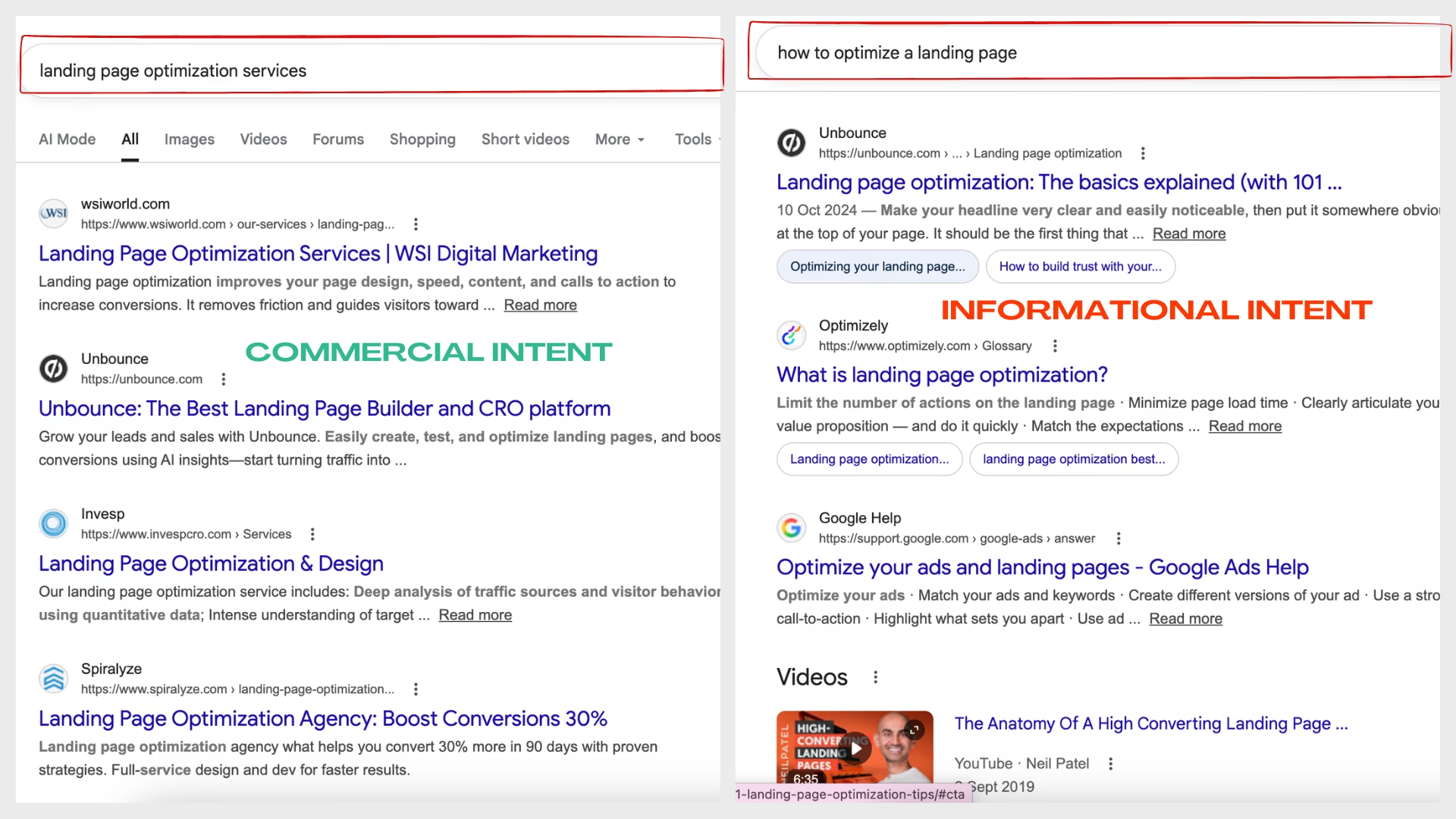
Google already reflects intent through search results. If the top results are service or product pages, the intent is usually transactional. If they’re blogs or guides, it’s informational.
According to Google’s helpful content guidelines, pages should be created primarily for people, not search engines.
The key is to align everything with that intent, headline, content, structure, and CTA. When a user lands on the page, it should immediately feel like the exact answer they were looking for.
If that match doesn’t happen within seconds, they leave, and rankings drop over time.
2. Landing Page Structure That Ranks and Converts.
A landing page doesn’t fail because of a lack of traffic. It fails because of poor structure.
If the page feels confusing or overwhelming, users don’t stay long enough to take action. A clear structure helps both search engines and users understand the page quickly.
The first thing that matters is the hero section. It should clearly state what the page offers, who it’s for, and what action to take. If this isn’t obvious within a few seconds, users leave.
Next comes the problem and solution. The page should highlight the user’s pain point and immediately show how it solves it. This keeps users engaged and moving down the page.
Then come the benefits, not just features. Instead of listing what a product or service does, the focus should be on how it helps the user.
After that, trust elements play a key role. Testimonials, results, case studies, or client logos help reduce hesitation and build confidence.
The page should then move into details or supporting content, features, process, or explanation, depending on the offering.
Finally, everything should lead to a clear call-to-action. One primary CTA, placed strategically, makes it easier for users to take the next step.
A simple structure like this works well:
Hero → Problem → Solution → Benefits → Proof → Details → CTA
When the flow is clear, users don’t have to think. They just scroll, understand, and act.
3. On-Page SEO for Landing Pages (Complete Checklist)
On-page SEO helps search engines understand what the page is about and when to show it.
If these basics aren’t handled properly, even a well-designed landing page won’t rank.
The title tag is one of the first things both users and search engines see. It should include the primary keyword and clearly communicate what the page offers. Keeping it simple and intent-driven improves click-through rate.
The meta description supports the title. It doesn’t directly impact rankings, but it influences clicks. A clear, benefit-focused description can improve visibility and traffic.
The H1 and heading structure should be clean and logical. The H1 should closely match the main keyword, while H2s and H3s help break down the content and improve readability.
The URL structure should be short and descriptive. Including the primary keyword and avoiding unnecessary words makes it easier for both users and search engines to understand the page.
Internal linking helps distribute authority across the site. Linking from relevant blogs or pages using natural anchor text strengthens the landing page’s ability to rank.
Image optimization is often ignored. File names, alt text, and compressed images help improve both SEO and page speed.
Schema markup adds context to the page. Using structured data like FAQ or service schema helps search engines better understand the content and can improve visibility in search results.
According to Google’s SEO starter guide, elements like title tags, headings, internal links, and structured data play a key role in helping search engines understand and rank pages.
The goal of on-page SEO isn’t to over-optimize. It’s to make the page clear, structured, and easy to understand, for both users and search engines.
In simple terms, if a search engine scans the page, it should immediately understand what it’s about, who it’s for, and what action it supports.
4. Content Optimization for Landing Pages
Content on a landing page isn’t about writing more. It’s about making every line move the user closer to action.
If the content feels generic or unclear, users won’t stay long enough to convert. Clarity matters more than length.
The first priority is relevance. The content should directly reflect what the user searched for. If there’s a gap between the query and the message, the page loses trust immediately.
Next is clarity over complexity. Simple, direct language works better than long explanations. Users should understand the offer without having to think.
Focus on benefits, not just features.
For example, instead of saying “advanced analytics dashboard,” it’s more effective to say “see exactly where your conversions are dropping and fix them quickly.” This makes the value clear.
The page should also include supporting elements like testimonials, results, or proof points. These build trust and make the content more convincing.
Avoid unnecessary distractions. Too much text, too many ideas, or unrelated sections can reduce conversions. Every section should support the main goal of the page.
Well-optimized content doesn’t try to impress; it makes the value obvious and the next step easy.
5. Core Web Vitals and Page Speed Optimization
Page speed directly affects both rankings and conversions.
If a landing page takes too long to load, users leave before they even see the content. Even a delay of a few seconds can increase bounce rate and reduce conversions.
Core Web Vitals measure how fast and stable a page feels to users. The three key metrics are loading speed, interactivity, and visual stability.
Improving page speed starts with image optimization. Large, uncompressed images slow down the page. Using compressed formats and proper sizing helps reduce load time.
Next is reducing unnecessary scripts and code. Too many third-party tools, trackers, or heavy scripts can slow down performance.
Lazy loading is another simple improvement. It ensures images and elements load only when needed instead of all at once.
A fast hosting setup and CDN also make a big difference, especially for users in different locations.
The goal isn’t just speed for SEO. It’s to make sure users can access, read, and interact with the page without delays or frustration.
6. Mobile Optimization for Landing Pages
Most users visit landing pages on mobile, not desktop.
If the page doesn’t load well or feels hard to use on a smaller screen, users leave quickly. Mobile experience directly impacts both rankings and conversions.
The layout should be responsive and easy to scan. Content needs to fit smaller screens without forcing users to zoom or scroll awkwardly.
Text should be short and readable. Long paragraphs feel heavier on mobile, so breaking content into smaller chunks improves readability.
CTAs should be easy to tap. Buttons need to be clearly visible, well-spaced, and placed where users naturally scroll.
Page speed matters even more on mobile. Heavy images, scripts, or animations can slow down the experience and increase drop-offs.
Navigation should be simple. Too many options or links can distract users and reduce conversions.
A well-optimized mobile landing page removes friction. Users should be able to land, understand, and take action without any effort.
7. Internal Linking Strategy for Landing Pages
Internal linking helps search engines understand how your landing page fits within your site and improves its ability to rank.
It also helps distribute authority from other pages. When relevant pages link to a landing page, it signals importance and strengthens its visibility in search.
The key is to link to highly relevant content. Blog posts, guides, or related pages should naturally point to the landing page where it makes sense.
Anchor text matters. Using clear, descriptive text helps search engines understand what the linked page is about. Generic phrases like “click here” don’t add much value.
At the same time, internal links shouldn’t distract from conversions. Too many links on a landing page can pull users away from the main goal.
A better approach is to build links toward the landing page, rather than away from it. Supporting content should drive traffic into the page, not out of it.
A strong internal linking setup makes the landing page easier to discover, easier to rank, and more effective at converting traffic.
8. Backlink Strategy for Landing Pages
Backlinks help improve a page’s authority, but landing pages are not always the easiest pages to build links to.
Most people don’t naturally link to service or conversion-focused pages. That’s why trying to directly build backlinks to a landing page often doesn’t work well.
A better approach is to build links to supporting content. Blog posts, guides, or data-driven content attract links more naturally, and those pages can pass authority to the landing page through internal linking.
Relevance matters more than volume. Links from websites in a similar niche or industry carry more value than random links.
The type of content also makes a difference. Pages that include useful insights, data, or unique perspectives are more likely to earn links.
Consistency is important. A few strong, relevant backlinks over time are more effective than a large number of low-quality links.
The goal isn’t just to get links. It’s to build authority around the topic so the landing page becomes easier to rank.
Conversion Optimization (What Most SEO Guides Miss)
Ranking a landing page is only half the job. If it doesn’t convert, the traffic doesn’t matter.
Most SEO guides focus on getting visitors, but not on what happens after they land. That’s where most opportunities are lost.
The first thing that matters is clarity of action. The page should make it obvious what the user needs to do next. If there are too many options or distractions, users don’t take any action.
The CTA placement and wording also make a difference. A clear, action-driven CTA like “Book a Demo” or “Get Started” works better than something vague.
Trust plays a big role in conversions. Testimonials, results, or client logos help reduce hesitation and make the decision easier.
Forms should be simple and friction-free. Asking for too much information upfront can reduce conversions. Keeping it short increases completion rates.
The overall flow of the page should guide users naturally. Each section should move them closer to taking action instead of overwhelming them with information.
Small improvements can make a big difference. Changes in headlines, CTA placement, or messaging can significantly impact conversion rates over time.
A landing page that ranks but doesn’t convert is wasted potential. The goal is to turn traffic into actual leads, sign-ups, or revenue.
Common SEO Mistakes for Landing Pages
Targeting high-volume instead of high-intent keywords
Chasing broad keywords might bring traffic, but it rarely converts. Landing pages work best when they target specific, action-driven queries.
Ignoring search intent completely
Creating a page without understanding what users expect leads to poor engagement. If the content doesn’t match intent, users leave quickly and rankings drop.
Trying to target multiple intents on one page
Mixing informational, commercial, and transactional content creates confusion. A landing page should focus on one clear goal and audience.
Over-optimizing with keywords
Stuffing keywords into headings and content makes the page feel unnatural. Search engines prioritize clarity and usefulness, not repetition.
Weak or generic headlines
Headlines like “Grow Your Business” don’t communicate value. Users should immediately understand what the page offers and why it matters.
Poor page structure and flow
Without a clear flow, users don’t know where to focus. A structured layout helps guide them from understanding the problem to taking action.
Too many links and distractions
Adding excessive internal links, menus, or pop-ups can reduce conversions. A landing page should keep users focused on one action.
Slow page speed and heavy elements
Large images, unnecessary scripts, and poor optimization increase load time. Even small delays can lead to higher bounce rates.
Ignoring mobile experience
A page that looks good on desktop but breaks on mobile loses a significant portion of users and impacts rankings.
No trust signals or proof
Without testimonials, results, or credibility indicators, users hesitate. Trust is often the deciding factor in conversions.
No clear or strong CTA
If the next step isn’t obvious, users won’t take action. A clear, visible CTA is essential for conversions.
Conclusion
SEO for landing pages isn’t just about getting traffic; it’s about making that traffic count.
Ranking alone doesn’t guarantee results. The real impact comes from how well the page matches intent, communicates value, and guides users toward action.
A well-optimized landing page brings together multiple elements, the right keywords, clear structure, strong content, and a smooth user experience. When these work together, the page doesn’t just rank; it converts consistently.
Most pages fail because they focus on one side of the equation. Either they chase traffic without thinking about conversions, or they design for conversions without considering SEO.
The goal is to balance both.
When done right, a landing page becomes more than just a page. It turns into a long-term asset that brings in qualified traffic, generates leads, and drives consistent growth without relying on paid ads.
Frequently Asked Questions
What is SEO for landing pages?
SEO for landing pages is the process of optimizing a landing page to rank in search results and attract high-intent users who are more likely to convert. It focuses on keywords, search intent, content, and user experience.
How is a landing page different from a blog post in SEO?
A landing page is designed to convert users into leads or customers, while a blog post is usually informational. Landing pages target transactional intent, whereas blogs often target informational queries.
What keywords should I use for landing pages?
Landing pages should target high-intent, transactional keywords. Long-tail keywords like “landing page optimization services” or “SEO services for SaaS” usually perform better than broad terms.
How do I optimize a landing page for SEO?
Start with keyword research and search intent. Then optimize title tags, headings, URL, content, internal links, page speed, and mobile experience. The page should be clear, relevant, and easy to convert.
Does page speed affect landing page SEO?
Yes, page speed directly impacts both rankings and user experience. Slow pages increase bounce rate and reduce conversions, which affects overall performance.
How many CTAs should a landing page have?
A landing page should have one primary CTA. It can be repeated across the page, but the goal should remain focused on one action to avoid confusion.
Can landing pages rank without backlinks?
Yes, landing pages can rank without backlinks, especially for low-competition keywords. However, backlinks help improve authority and make it easier to rank for competitive terms.
Why is search intent important for landing pages?
Search intent determines what users expect to see. If the landing page doesn’t match that expectation, users leave quickly, which affects both rankings and conversions.
Do I need content on a landing page for SEO?
Yes, content helps search engines understand the page and helps users make decisions. It should be clear, relevant, and focused on solving the user’s problem.
What is a good conversion rate for landing pages?
The average landing page converts around 2–3%, while well-optimized pages can reach 8–10% or higher, depending on the industry and traffic quality.